Tate’s story
My son-in-law started beating me at golf.
I wanted to practice all winter, and I had nowhere to put a simulator. My wife wasn’t going to let me get a full‑size one anyway. So I built a simulator that disappears when I’m not using it. It worked so well, my buddies told me I had to make them one and start selling it.
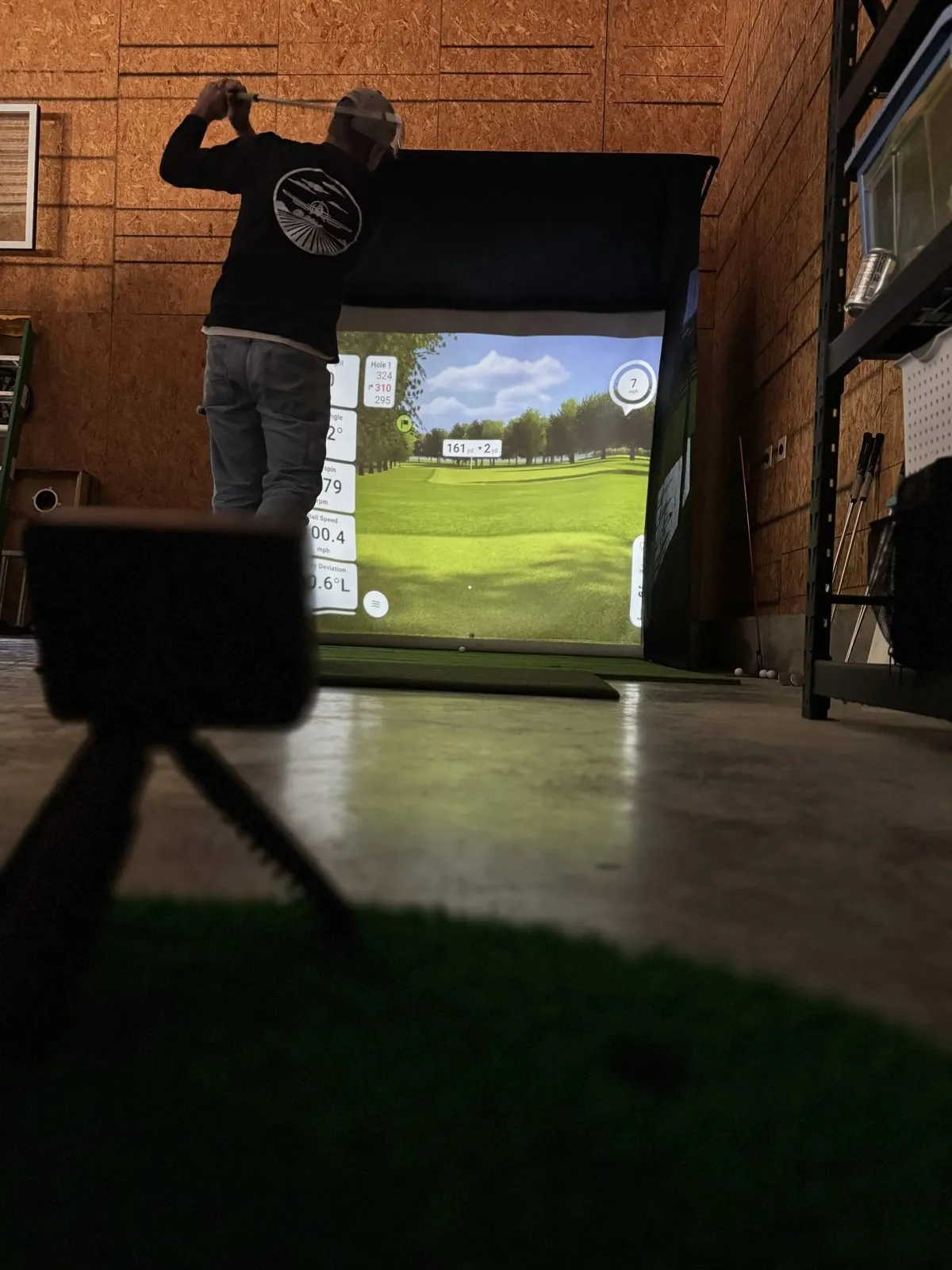
My daughter married a golfer. Parker and I played together, and for the first couple of years I could beat him.
Then he beat me. I was dang near 50, and this 25-year-old had just taken me, and I said it right there: man, I’m getting a golf simulator this winter. I wanted somewhere I could practice.
I’ve got ten thousand irons in the fire, and Duffer Golf is the last one I thought I would ever have. It started as nothing more than a place to hit balls that winter.
Nowhere to put it.
Our two-car garage was full of seven kids’ bikes and toys. Out back I had a detached one-car garage, my man cave, and it already held my fishing boat. It was where I did my woodworking and whatever else I was tinkering with. It was also the only way to get the lawnmower into the backyard.
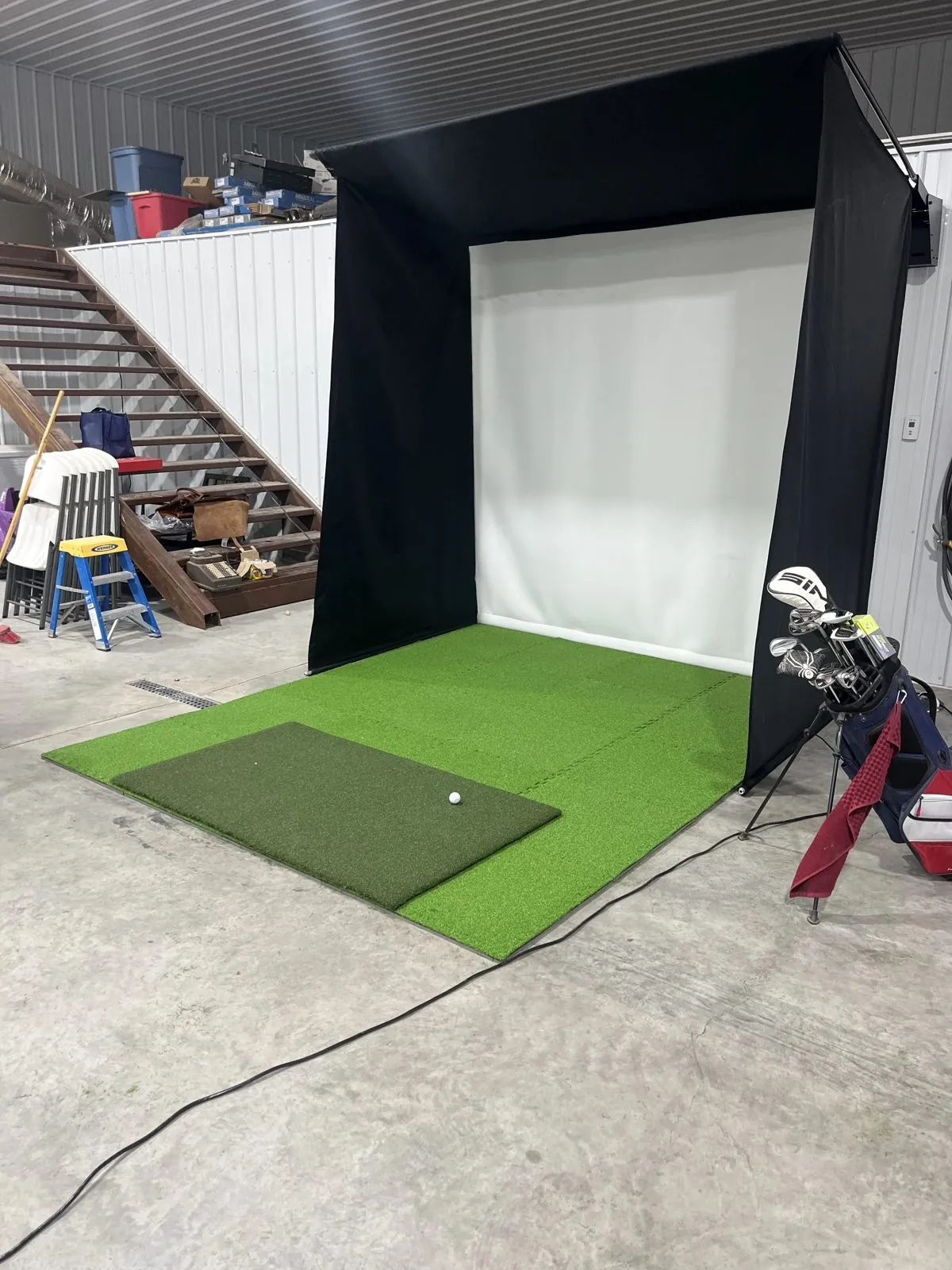
There wasn’t a corner of the place where a simulator could stay set up. So I decided to build one that would roll up out of the way. It had to. Otherwise the mower wasn’t getting through.
Why couldn’t I use that?
I researched retractable simulators. The ones I found looked complicated to install. Some ran on multiple tracks. Some hung from garage door rails. I couldn’t find one with the side protection built in the way I wanted, and my one-car garage had just enough space, so every inch mattered.
Then I looked at my kids’ adjustable basketball goal and thought: why couldn’t I use that same simple idea to raise a golf enclosure up off the ground? A straightforward mechanical system, no motor and no wiring to run.
So we went out to the farm, and I pounded it out.
One came back and hit me in the face.
The first version solved the enclosure. It went up the way I wanted. But I’d left the flooring down, and every time I drove the mower across it the tires tracked in mud, grass, and sometimes dog poop. That’s when I realized the floor needed a place to go too.
That first one taught me what else had to be built in. I hadn’t connected the side protection to the impact screen, so I hit balls through the corners that bounced around behind the simulator. One even came back at me.
I tried curtains. I changed the design. I kept improving it. When stitching failed, we added seatbelt webbing. I wanted the installation and the everyday use to be simple, while the enclosure itself could stand up to real golf shots.
I wasn’t giving up my shop.
I love golf. I also like to fish, woodwork and tinker out there, and I wasn’t willing to hand the whole shop over to golf. What I wanted was a place to practice through the winter, or hit balls on an evening in a heated or air-conditioned space, and still have my shop the rest of the time.
So the simulator had to store up near the rafters when I wasn’t playing, and it had to be quick. If setting it up took thirty minutes, I knew myself. I wouldn’t use it nearly as much. What I wanted was something I could bring down in about three minutes, play, and put away just as easily.
Where I wouldn’t go cheap.
I tried cheaper, easier versions of some parts first. That’s how I learned where the effort mattered.
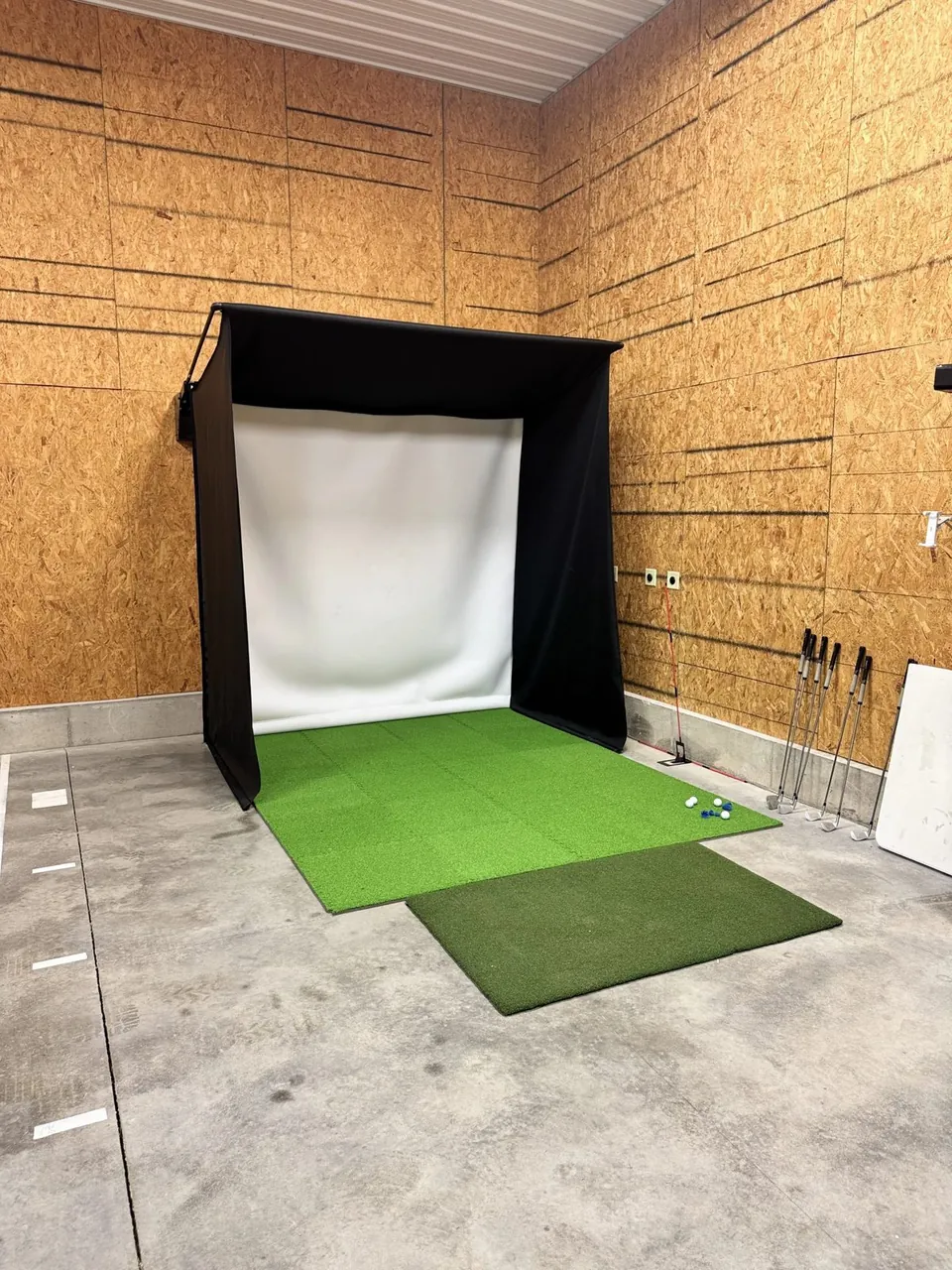
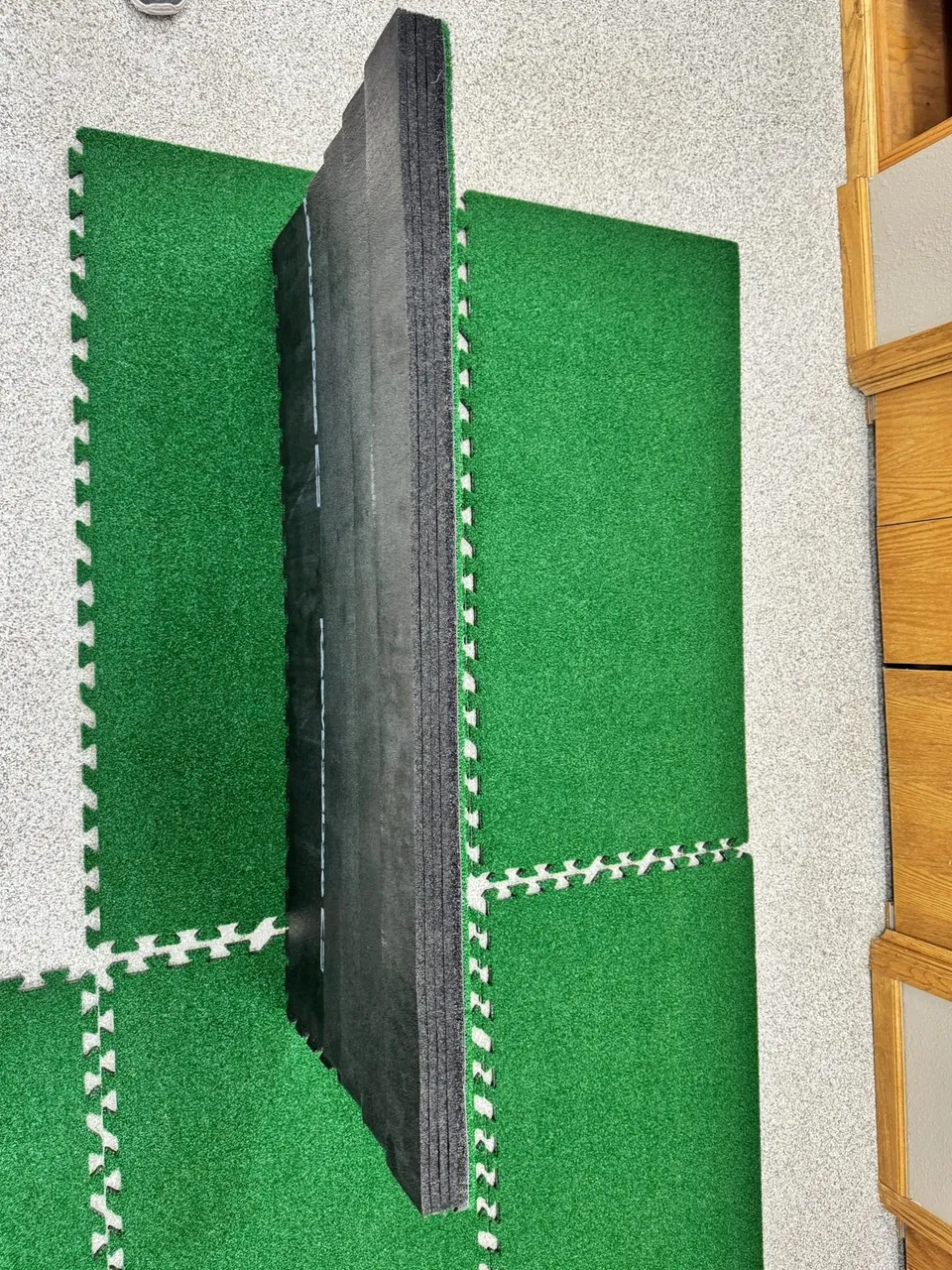
The floor started as twelve 2‑by‑2‑foot tiles, and we never liked the edge pieces they needed around the outside. So we partnered with a flooring company to make 2‑by‑4‑foot tiles with a clean perimeter and our patent pending wedge. The first row by the screen looks like an old-school bike ramp. A topped shot rides up it into the screen instead of coming back at you. It looks finished, and I store six tiles instead of twelve.
My first hitting mat was too forgiving. I could hit behind the ball, the club would bounce through the turf, and the shot looked fine. Then I’d get to the course and hit everything fat. I wanted a mat that tells the truth. I could have saved money with a 3‑by‑5 mat, too, but I chose a 4‑by‑5 so there’s room to position the ball and keep the distance a radar launch monitor needs.
The first impact screen was cheap as well. My backyard neighbor asked what I was doing out there all evening. We moved to a three-ply screen. It’s much quieter, even when I hit driver.
It sounded like a shotgun going off every time I hit a ball.
The boat and the table saw stayed.
After the mower, I started rolling the turf up against the wall when I was done, and it never lay flat again. The edges curled, the middle bubbled. That is how the floor ended up as tiles. Now they store on the wall with the hitting mat, the enclosure goes up near the ceiling, and the bass boat and the table saw get the room back.
Three years of testing went into finding the weak points and fixing them. When you put it away the room is a room again. Some owners never put theirs away at all. The option’s there when they need it.
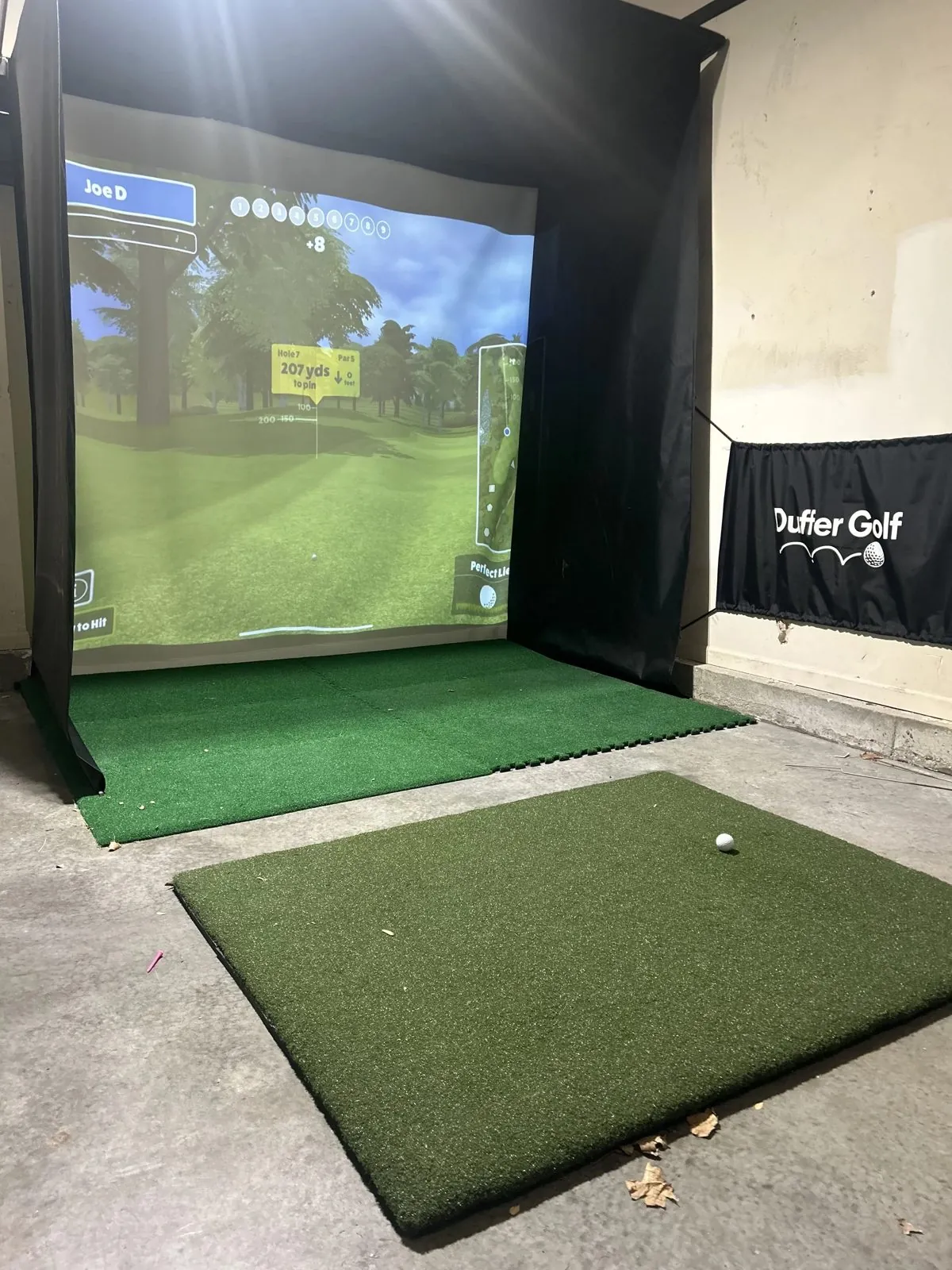
Bigger than my garage.
After the third or fourth revision, the simulator started to look a lot like the Duffer we have today. I showed it to my golfing buddies and to Parker, who, for the record, still beats me pretty consistently.
I asked them straight: is this worth trying to patent, manufacture and bring to market? They gave me a resounding yes. My buddies put it plainer than that: man, you’ve got to patent this and sell it. That was the point when I started thinking this could be bigger than just my garage.
Parker works for Duffer Golf now, building them.
My son-in-law is the reason Duffer Golf got started.
Everyone called him Duffer.
My grandfather’s real name was Laverne, but everyone knew him as Duffer. He wasn’t a golfer. When it came time to name this, it felt right for two reasons. It was his name. And a duffer is an everyday golfer like me. Most of us aren’t pros. We just love the game.
A buddy of mine installed a Duffer this spring. His two sons hadn’t played much golf. They started hitting balls on it, and that led the three of them to a Sunday round at their local course. Afterward he texted to thank me. He said that day with his sons wouldn’t have happened without Duffer Golf. That meant a lot to me. It told me this could be more than a place to practice.
Tate Mauck, Hoxie, Kansas